Thursday, May 07, 2009

Kindle and Digital Magazines

We are quite often asked whether the Exact Editions platform works on the Kindle. To which we have a number of answers:

  1. The Kindle is not available in Europe so we have never tested it and are not sure whether the web pages we serve would work on the non-standard browser that the Kindle offers its users. There is no word on when the Kindle is coming to Europe and I would say "Dont hold your breath".
  2. The Kindle does not support colour, and most magazines really benefit from colour, so we dont regard the Kindle as an ideal magazine reading platform.
  3. The Kindle supports re-flow (text can expand or shrink more or less at will) that is not a feature that would work with Exact Editions. We deliver pages the way they were designed. Exactly as they were laid out by the artist or repro house.
  4. The Exact Editions pages and images can be easily zoomed or shrunk (especially on the iPhone). That doesnt work on the Kindle.
  5. The Exact Editions system makes pages highly interactive, so web urls are live as are email addresses, phone numbers can be clicked to call (again a great resource on the iPhone, but no help on the Kindle)
  6. The content on the Kindle is tightly controlled by Amazon, and they probably would not be pleased to have content passed their way be a technology partner (Apple are very different on this) and they strike tight and onerous deals with their publishing partners. Probably no room for Exact Editions in that clinch. If Amazon wants to have magazines on their platform they will approach the publishers direct.
It is not quite a matter of chalk and cheese, but it would be fair to say that Kindle looks at the world of digital books and digital editions in a very different way than Exact Editions. We feel that Google and Apple are more kindred spirits.

Monday, May 04, 2009

GBS: What if the Judge rejected the Settlement?

Here is an interesting comment on the Google Books Settlement that came up in an email exchange a couple of days ago:

I don't think anyone (other than the plaintiff's lawyers) feels good about the settlement as written. As Pamela Samuelson noted, "the settlement, if approved, will shape the future of reading, research, writing, and publication practices for decades to come." I don't think anyone knows what this future will look like, which is troubling.

I have not, however, heard with certainty that the court has the ability to modify the settlement. So the best we could hope for is that the settlement is rejected and the parties in the suit then reopen the discussion, but this time with the open and active participation of public interest groups, librarians, and a broader range of authors and publishers (in order to better represent the diverse interests of the class). I think that there is a snowball's chance in hell of that happening. If it did, it would take years.

So the bottom line, if the settlement is approved, the public in the US will have access to millions of volumes that are otherwise inaccessible to them. They will get it online via book search, and they will get it through the free license to public libraries (something that there was no reason for Google to include, except out of public interest). As long as we have a copyright system that treats every out-of-print scholarly work as if it is the latest Hollywoood blockbuster, I don't see any other way we could get access to this content.

...... it may not be perfect, but that doesn't [necessarily] mean that it isn't good.
This came from Peter Hirtle, a lawyer and a librarian who blogs at LibraryLaw. I find this pretty convincing but also depressing. Peter Hirtle presumably shares some of the reservations of Pam Samuelson, perhaps also of Bob Darnton, but he thinks that the Google Books Settlement will give us a lot that we would not otherwise get. Realism beats idealism.

It could be that the Google Books Library would be a lot better if it was more open and now is the time at which the demands for open-ness should be made. Whether or not the judge has flexibility in making his ruling, it would seem clear that the court of public opinion will have an effect on the way in which Google and the Books Rights Registry operate, post settlement.

Is it even possible that the best solution for Google might even be to have the Settlement rejected, or thrown back for negotiated amendment? If the Settlement and its anticipated services rolls out just as it has been formulated, specified and agreed by the parties, Google will be required to become an enforcer and an exploiter of the intellectual property in the orphan copyrights. Google will be in a very prominent and exposed position, comparable to Elsevier (which has become a kind of whipping boy for libraries and universities), or even worse, it will become subject to monopolies investigations.

I am sure that Google would deny that rejection would be an outcome that they desire. Hey they reached agreement with the plaintiffs and have a lot invested in making the settlement work! But they did agree to a postponement and if the Settlement is rejected, there is only one company that can really make a more open solution work. Google. Google would then probably propose to simply run a search service with most content well sheltered behind a meagre snippeting results service which will not have significant liabilities for Google. They would retreat to their original 'card index', simple search solution. Access will be restricted unless the plaintiffs can propose and agree to a solution which will meet the judge's tests. The Publishers and the Guild will be in a much more awkward position. Chess players have a term for it: zugzwang. None of the legally permitted moves is attractive and its the Authors and the Publishers turn to move. Are the Authors going to pay for the Books Rights Registry? Are they going to really want to sue Google till the pips squeak? Are the publishers going to insist that searching and promoting the discoverability of orphan books is not a good thing?

No. Google has shown that it is willing to do some work, to solve problems and move things forward. The publishers and the authors have no consistent leadership and will dance attendance to the tune that Google composes. The judge has a strong hand to play here and it will be in all our interests (Google's, authors, and publishers included) if he puts some public interest algorithms into the equation of settlement.

Thursday, April 30, 2009

The New iPhones

In early June Apple is going to release its new 3.0 operating system for the iPhone. It seems quite probable that they will then, or shortly afterwards, release some new computer models. A new Mac mini, a new MacBook, or something like a blown up iPhone, a 10" touch screen, tablet style media player, a not quite netbook. Speculation is rife.

In about 6 weeks we will know some of the answers. A larger form iPhone that is touch screen and is media-oriented is quite likely. The success of the iPhone App store demands it -- last week the billionth App was downloaded. Apple was able to spread the success of the iTunes store by implementing it for Windows (6 months after the initial iTunes Store was launched in 2003) and that move played a big part in the success of iTunes and the iPod. Such a move is not going to work for the App Store, where most of the best software depends critically on the hardware, the geo-sensing and the touch-screen interface. So Apple will extend the range of its App Store software by extending the breadth of its hardware platform (there will probably be a low-end nano iTouch as well as an upscale iTablet before long).

It is a curious feature of the iPhone and the App store ecosystem that from the publisher's point of view the consumer's device works more or less like a dongle. Apple sell you an App for your specific account, tied to your credit card. You can work with an App on your iPhone and use the same App on your iTouch but you can't shift it to another platform. Oddly enough you can't even print from an App, and there have not been too many complaints about this, though Apple will remedy the deficiency with the forthcoming upgrade to the O/S. Apple sells software and it is in Apple's interests for free software to be given away (that broadens the appeal of the hardware and the platform) and it is in Apple's interests for software to be sold (Apple takes a 30% cut on everything that passes through its tills on the App Store). We have not seen a wave of pirated Apps and I suspect that Apple will make sure that this does not happen. They will not need to resort to DRM to do so.

For plenty of reasons, book publishers should not be thinking about DRM. But a lot of them do, and some of them are insisting on it for their eBooks. For those publishers, the fact that the Apple environment doesn't need it is an obvious attraction. The fact that Apple is also projecting the style and elan of Prada, rather than the sheer efficiency and economy of Primark will be another attraction for many authors and publishers contemplating iPhone ventures.

The sheer quality of the hardware (the brilliant screen) and the innovative touch interface give Apple a unique platform for media deployment. As the form factor gets a little bigger it will be brilliant for books, especially for digital editions - which map the quality and layout of a well designed printed volume. Just at the moment the world of digital publishing is preoccupied with the concern that Google and/or Amazon are going to end up being the monopolist of world literature. Mark my words: by the time of this Autumn's Frankfurt book fair, Apple will be another focus for monopoly concern. Can you have three non-collusive monopolists in the same market? Or is that a competitive situation?

Wednesday, April 29, 2009

The Berkshire Encyclopedia of China

A massive new title is now in the Berkshire Publishing shop on the Exact Editions platform. The Berkshire Encyclopedia of China has nearly 1,000 entries and comes in 5 volumes in the printed edition.


The printed volume sets will be released and sent to subscribers shortly, but the whole work is now searchable and freely sampleable on the Exact Editions platform in the service we are running for Berkshire.

Here are some sample entries:

Climate Change—​International Cooperation
Currency Valuation
Deng Xiaoping’s Southern Tour
Feng Shui
and we must have
Panda

not forgetting the complex index, with a lot of links.

The key thing about a big reference book such as this is that we can enjoy the richness of the search results. 163 hits for 'Deng', 17 for 'HIV', 106 for 'Canton', 16 for 'Guangzhou'. 'Nixon' gets 39! and 4 for 'Obama'. I wonder how many 'Obama' mentions there will be in the next edition?

Monday, April 27, 2009

Cloud Computing and Content Services

Richard Wallis who blogs as Panlibus for Tallis (the Solihull UK-based library automation specialist which seem to be going places after 40 years of quietly honing their LMS in the black country), has an interesting post on the way that library suppliers are moving into the cloud. Of course that is going to happen, and it will be interesting to see how OCLC, "the 500 lb" gorilla impacts the traditional library automation market. Especially with Google "the 15 million book" gorilla, hobbled by obvious metadata shortcomings, lurking in the background. Following on from Richard's post, I started to wonder how the content aggregators are going to react to the opportunity and challenge of selling content services within a cloud computing framework.

A recent survey paper from Berkeley summarises the hardware innovations of Cloud Computing as follows:

1. The illusion of infinite computing resources available on demand, thereby eliminating the need for Cloud Computing users to plan far ahead for provisioning.
2. The elimination of an up-front commitment by Cloud users, thereby allowing companies to start small and increase hardware resources only when there is an increase in their needs.
3. The ability to pay for use of computing resources on a short-term basis as needed (e.g., processors by the hour and storage by the day) and release them as needed, thereby rewarding conservation by letting machines and storage go when they are no longer useful. Above the Clouds: A Berkeley View of Cloud Computing (p 1)

A service model and a charging system of this kind would be very attractive to content users if it could achieve the radical cost savings typical of cloud computing. Service subscribers would jump at the promise of a service which gives them the 'illusion' of access to infinite information, (this is where the Google library of at least 10 million books comes in) and which eliminates the need for upfront commitments. The first and second capabilities are straightforward, but there does not appear to be a rationale for 3. The problem is that Information is not rivalrous. From the supplier's point of view, whether as creator or as intermediary, there is nothing saved when users do not use a resource. The intrinsic value of copyright resources does not increase because less use is made of them. Paradoxically the value of a scientific resource such as Science Direct actually increases if its usage is widespread. From the information suppliers standpoint the 'trick' is to maintain the illusion that a resource is effectively available wherever it is needed, even though a great deal is being charged for it and the barriers to entry and easy use are high. Paying for the resource on a short-trem or intermittent basis is unlikely to appeal to the rights holder. I suspect that the Books Rights Registry will be slow to sanction Google in the introduction of an hourly 'pay as you go' access model to its main collection.

A solution to this conundrum will emerge, and I suspect that it will evolve in the direction that publishers and rights holders want their information to be accessible, searchable, citeable, and to a limited extent viewable for free. But they do not want to give it all away. The necessity and the attraction of charging for data and content will be limited to services which are in some extent premium, whether by virtue of extreme topicality, of outstanding readable quality, or of additional value services. The Exact Editions service already deploys a cloud-based content management system it will be interesting to see how our partner publishers evolve solutions for end-user pricing and public access (all our public-facing services are now searchable without need for a subscription or controlled access). In fact every page can be viewed at thumbnail size without the need to register an account. Perhaps we need to evolve towards a stage where every citation at least delivers a thumbnail view even of 'closed' pages.

Sunday, April 26, 2009

The Press Gazette is Saved

The magazine has been bought by Mike Danson's Progressive Media group. When Wilmington announced a fortnight ago that they were closing the magazine it was withdrawn from the Exact Editions shop, though subscribers still have access to their accounts. It looks as though the magazine will resume publication in May and we hope that it will continue in its successful digital form on the Exact Editions platform. More definite news later in the week.

A new publisher with entrepreneurial vision could push the magazine back into the mainstream of British media coverage. Promoting the digital edition and selling subscriptions to it at an attractive price should be a part of that vision.

Saturday, April 25, 2009

On Thinking Beyond the Google Settlement

We enjoyed the London Book Fair earlier this week. There was considerable interest in the project that Bloomsbury have announced to create 'shelves' of content for public libraries, using the Exact Editions platform. There was also much interest in the fact that Exact Editions is able to directly support the iPhone user experience.

The fair was slightly quieter than last year and some publishers are feeling the squeeze of recession in reduced consumer purchases, but there was also a great deal of optimism and excitement about the books industry and in particular about the potential for new digital markets. I am sure that book publishers are in much better shape than newspaper or magazine publishers to adapt to the new challenge of digital publishing. If there were a Trade Show like the LBF for newspapers or magazines this year in London it would be so gloomy, or probably postponed.

There was certainly some discussion of Google Books Search, of the looming, probable, approval of the Settlement in the dispute with the Authors' Guild and the Association of American Publishers. There were some meetings where Google was discussed. A literary agent, Piers Blofeld, penned an angry diatribe against Google Book Search (see p 12 of the Bookseller Daily for 21 April): I am sure that I was not the only reader of this piece to be thinking "Canute". But overall there seemed to be a quiet air of business as usual, with the book trade; publishers, authors and agents, not quite understanding what is about to hit it. What is about to hit it, or them?

The London Book Fair is much smaller than the Frankfurt Book Fair, but its focus is overwhelmingly on British or English language books. The Main Hall at Earls Court accommodates several hundred stands from leading British, European and American publishers. Those publishers and the booksellers, agents, librarians and authors spend three days discussing, negotiating, dealing, buying, selling, promoting, praising, discounting, rubbishing, remaindering and very occasionally reading tiny little bits of the 300,000 odd books published or about to be published in the English language. The show is overwhelmingly concerned with new books and major sellers from the back list. The book business pretty much is the business that is on display at the London Book Fair and it has a focus on this year and next year's books (2 years worth of books from the UK and US market takes us to 300,000 or so new books).

If we think of this rather large and hangar-like hall being occupied by the books that are currently the focus of the commercial market for books, we can also imagine a skyscraper of 30 or perhaps 40 stories being built above the Earls Court Stadium. The stacked stories of this skyscraper will each contain another 300,000 mostly older books, but this time all of them ordered, regimented and deployed in total silence and precise obedience with no noisy haggling or discordant trading. Such a skyscraper would be a serious obstacle on the flight path for planes approaching Heathrow, but its towering shadow does give us an idea of the relative scale of the Google Books Search project as set against the current (this year, last year) output of publishers in the English language. The 10,000,000+ books that Google will have in its arsenal when the Google Book Search library goes live in a year of two will completely dwarf the current activity. The 40 odd stories of the Google Books skyscaper will not need the traditional tools and mechanisms of the book trade. The transactions, accessibility, searchability, and reading of these millions of books will all be a matter of database and web-driven activity. Commercial arrangements will be settled by the Books Rights Registry or the publishers' agreements with Google and the commercial transactions and access rules will be executed by Google or its contracted distributors. There will be very little need for human intervention, except at the periphery. When authors, agents and publishers decide to put things into the system, or, at the consumer edge, when readers, searchers, librarians or consumers decide that they wish to have some form of access to the repository. Of course Google will also not need a skyscraper at all. The few hundred terabytes, possibly by then one or two petabytes, that may be needed for the Google nearly-complete libary in 2012 will comfortably fit in the confines of the whirling, bladed and racked systems, housed in a single standard freight container. We should add a few more trailers to cope with the bandwidth of a billion users, but it is all fitting nicely in the underground loading bay that they have at Earls Court. The efficiency and reliability of the Google system does not require large physical infrastructure. Push on a couple of years, and by 2014 I think one can be sure that Google will have most of the world's published literature in the Google database. How will new books then be working in relation to the 50, 60, 70, 80 stories high skyscraper of previously published but now completely databased and universally accessible digital books?

So how indeed is the traditional world of books going to cope with the fact that most of the world's published literature will be available, purchasable, readable and eminently usable as a database system within a few years? The new books which are then being published will still need the care, design, attention and promotion of publishers and editors, but will readers be expecting to buy new books in volume form when everything else is usable and being used as part of a database system. Will Google be totally dominating the market for new books, as it apparently will be monopolising the market for 'orphan' books?

We may wonder. One suspects that there is far too much that goes on in the world of writing, authorship and publishing, for the talent, the style and the colour to disappear into the smooth and virtual maw of a Googlised library. Google, in my view, will not end up owning the books business, and its monopolistic trajectory will stall or run into natural limits. But in walking the aisles beneath this 40 story skyscraper, rising inexorably above Earls Court, full of scanned and indexed titles that are in many cases neglected and orphaned, one does wonder whether there can possibly be a future for proprietary file formats, Kindle or Sony readers and the non-Google searchable distribution networks that publishers are building and commissioning for themselves? What does Mr Bezos think he is achieving by locking users into a DRM which is Google inaccessible? Elsevier, Springer and Wiley are in enough trouble with their own non-standard, pre-Google Book Search, content management and access systems for it to be doubtful that the world needs another 175 variations on the same theme. There is quite a lot going on in the world of digital books that is completely irrelevant to the GBS seismic shift. The Guardian journalist writing about eBooks at the Fair managed to avoid mentioning Google or GBS at all. If the digital book is not in a format that can be searched by Google (or similar search engines) you might as well forget it. Google will not be selling access to everything, it will not be allowed to build such a monopoly, but it will be searching everything that is published. That is the big win for Google from the Settlement.

There will be one hell of a row when it is fully appreciated that this wonderful Google system is only to be properly and fully deployed in the USA. But leaving that on one side, the London Book Fair of 2012 will take place very much in the shadow of the decision Judge Denny Chin in the Southern District of New York this summer. We all need to be thinking post-Google Settlement.

Thursday, April 16, 2009

The Bloomsbury Library Online

We have been working with Bloomsbury for some months to develop a subscription service that they will shortly be launching for public libraries. The project is no longer embargo-ed and a select group of journalists will now have access to the final test version of "The Bloomsbury Library Online". The initial titles include: The Suspicions of Mr Whicher (by Kate Summerscale), The Guernsey Literary and Potato Peel Pie Society (by Mary Ann Shaffer), The Death of Vishnu by Manil Suri, and Burnt Shadows, (by Kamila Shamsie). More titles will follow. The Bloomsbury set, as we have termed it 'in-house', will be on full public release in a couple of weeks. The Bloomsbury concept has been to provide a range of the best modern writing and new fiction through a subscription service that will be available to public libraries, and through the libraries' own portals for reading by patrons who hold library cards.

It has been fascinating to watch this project develop over a period of months (I have not been involved, so I have been hearing about it second hand, and seeing prototypes which my colleagues have been working on with Bloomsbury). Plenty of issues and technical considerations have been examined -- don't anybody tell you that Trade publishers are not devils for detail. They are painstakingly careful and systematic about many fine-grained decisions, I do not think Bloomsbury are atypical in this. There have been a lot of emails and visits! All along, Bloomsbury have been anxious to win the support of their authors and their agents, so we have been also hearing at two or three removes about their concerns and goals.

Bloomsbury have held steady to their target of developing a service for libraries, initially primarily in the UK. It has turned out to be pretty much the project that they explained to us before Christmas. A shelf for libraries of some of the best books, from contemporary authors, which will grow and which will also serve to promote sales of the print books and public awareness of the authors selected. I suppose that there is, in this chosen vehicle, an element of quasi-political support for public libraries - a resource which publishers rightly hold to be key to the flourishing of a literary culture. Nevertheless it is interesting that one of London's leading Trade publishers should set such a priority on the support of public libraries, and that they should fashion such a service for a market which must be a tiny fraction of the market for their print publications. Some STM publishers sell the bulk of their books to institutional libraries (school and college libraries will also be able to subscribe to the Bloomsbury service) but General Trade publishers surely only sell a few percent of the typical hardback print run to the library market. Bloomsbury have not decided how far they will take their digital development. Or, if they have, they haven't told us about it. This year all major trade publishers are putting out exploratory feelers for the digital books market. No one knows where we will be with digital books in 12 months time -- anyone who says otherwise is a visionary or a consultant with an axe to grind! But they clearly have plans to move things on from the current focus. It will be fascinating to see how that works out. we are not privileged to the Bloomsbury plans, but they have been asking a lot of questions!

Wednesday, April 15, 2009

The Trouble with Orphans

In the old dispensation books (and magazines and newspapers) used to be published and then gradually disappear. A few copies of any particular print run would be kept in archival conditions in important libraries, but by and large they gradually mouldered away. In fact they biodegraded into mulch. Something similar happened to the 'copyrights': to the intellectual property that the publications crystalised. After a few decades, and with the exception of a very few masterpieces or works of genius, the intellectual property that they represented was of negligible value or interest, and they would sooner or later fall into the public domain, probably before the physical book biodegraded. At that point the 'IP' did not matter, or rather it mattered only to the public domain.

In the last 10 years there has been a growing tumult about 'orphan' copyrights. Or 'orphan works'. In the eyes of some of the key critics, eg James Grimmelmann, the real problem with the Google Book Search proposition and the Settlement that Google is reaching with Authors and Publishers is all about the orphans that are being swept up into the maw of Google's 7 million, and counting scanned digital books.

But the funny thing about 'orphan works' is that the very category is defined by the technology which makes it possible to replace or preserve printed books by digital books which could last forever. The books and photographs are no more 'orphan' than they ever were, it is just that they look like they should be imortal rather than biodegraded, so who can speak up for them on that? Suddenly old and mostly forgotten copyrights seem to have some possible value, because the digital books could last for ever, and who knows but some of them (a few) will surely have considerable hidden value? To many of the critics it does not seem right that this value should accrue or crystalise to Google (and to the Authors Guild and some Publishers), rather than to anybody else.

If you buy the idea that the 'orphan' status of a book (or some other piece of intellectual property) is more a function of the new technology than of the old which was around when the object was born or conceived, there is an interesting corollary. As technology improves the orphans become more valuable. The 'orphans' may indeed become a lot more valuable when computation advances again, as it will. Especially if the orphans can be used to construct something else, something that we dont yet understand. Who is to say what value they have? There is a lot in the Google Books Settlement about 'non-consumptive' research (which roughly means 'reading by computers and software'). Who knows how valuable that could become?

We may get a glimpse of this when Wolfram's intriguing Alpha project is unveiled. From Rudy Rucker's recent blog about what Alpha portends, it certainly sounds to me as though Wolfram and his team have been doing some pretty sensitive 'non-consumptive' reading of key reference books:

I asked him how he is handling the daunting task of finding out all the possible scientific models. “There’s only so many linear feet of reference books that exist in the world,” remarked Wolfram. “Nowadays when I go into a library I look at the reference shelves and try and estimate how many of them we’ve picked up. I think we’re close to ninety percent by now. Right now my office is mounded with books with bookmarks for things we still need to implement, and one by one the bookmarks and the books are going away.” www.hplusmagazine.com
When the database representation of what a book is about gets to be that powerful and expressive, non-consumptive reading is arguably more useful and valuable than the old fashioned human kind of reading. Orphan copyrights, in a clever enough computer environment, have much more value than their publishers or authors could have imagined....

New Site Releases

We have been making various enhancements to the Exact Editions platform in the last couple of weeks. In many cases these improvements just merge into the slipstream and practically nobody notices. There was a small improvement of this type yesterday, and I am going to mention it because it needs to be noticed.

For a good while we have offered power-users a keyboard command which speeds moving between pages {Ctrl+left, Ctrl+right, for page forward or page back}. These moves speed up reading and work for the double page view and the single page view. We have also recently introduced a 'fit to width' icon. These two functions work well together now as the browser 'remembers' your fit-to-width preference and so allows readers to zip through a magazine with pages fitting themselves to the circumstances of the individual browser in use at the time. This change is symptomatic of the need to keep a reading platform as unobtrusive and 'silent' as possible. Ideally the readers of the publications on our platform should not notice that they are using Exact Editions at all. They should be fully in the book or immersed in the magazine.

Exact Editions works best when the users really don't notice the fact that they are using a web platform. So we need to let users know about the Fit-to-width Icon, without ramming it in their face... Here it is:


We have a way to go yet, but gradually we seem to be getting there.

There are two more recent changes that merit a blog mention. Publishers sometimes wish to be able to sell a collection of books for a single price, as a set or shelf (whilst perhaps also wishing to sell them singly at individual prices). This functionality has been requested by several of our partners and is now supported. The management of 'title sets' in the Exact Editions platform is quite sophisticated and tracks through into the way individual accounts are managed, renewed, promoted and paid for.

We have also frequently been asked whether we can support 'territorial restrictions'. This is not something that generally appeals to magazine publishers, but many general interest book publishers have to support this concept of 'regional markets'. They simply do not have the right to sell the digital edition to a customer resident in Asia or the Australia. We can now support this requirement. Which is not to say it is an entirely good thing to have lots of them! Geographical restrictions on the web are a bore and they complicate both the e-commerce and the support function. Our system is country-based and is driven by the address of the credit card or PayPal account, it applies to the transaction. Once someone has bought a subscription they can read it anywhere, which is of course the way it works with physical books. So publishers and agents should be happy with that.

Note: I edited this post, shortly after posting it. One of the new features we introduced yesterday seems not to work perfectly on all the important browsers. Its a 'nice to have' rather than an 'essential' usability feature. So it may come back in due course...... Version control, version control! Keeping track of it on Web Services and on Blog postings can get complicated!

Tuesday, April 14, 2009

Folding Magazines

Some magazines will make a successful transition to digital subscriptions and digital distribution. Some will not. The commercial environment for magazine publishers is getting tougher, and the fall in advertising budgets across all media segments is not helping. The magazines that really need to build their digital subscription revenues should get going with the subscription service as soon as possible; and keep in mind that the Subscribers have to have a good reason to subscribe. The subscriptions will not come if all the content, or the better part of the content is made freely accessible on the magazine web site.

Two magazines on the Exact Editions platform announced that they were closing up last week. It has been no secret that The Press Gazette has been losing money for at least four years and for its last three proprietors, so no surprise but very sad to hear that its next issue will be its last. The Ecologist is also soon to produce its last print issue. Zac Goldsmith its wealthy and influential proprietor, writing in the Guardian, sees this as a positive step and not one motivated by the magazines losses. He points out that the magazine has never made money and he has never been in it for the prospect of profits:

What has changed is that we have reached a point – compounded by the recession – where we are not able to get as much value for money as we could from the internet. Online our potential readership is limitless. If we get it right, we can reach millions. We can launch campaigns and see immediate results. We can bring news to people when it matters – now. The format will change, of course, but we won't lose anything that has made the Ecologist vital and relevant. We will continue to provide the best analysis and the best investigations. We will continue to provoke, fearlessly, where that's needed. (Zac Goldsmith: Why the Ecologist has Gone Online)
When a publisher decides to cease print publication Exact Editions promptly removes the publication and its sample issue from the Exact Editions shop. We also arrange with the publisher to refund any subscriptions which have not been fully delivered (this is a very important obligation which any reputable publisher accepts), but we are also able to continue to offer access to the available back issues for the term of the subscription. So subscribers should not lose out. Whether the archive of back issues can be kept available in the long term or made available, perhaps as open access, in the longer term, will depend on the publisher's policy.

While we will miss these excellent magazines, the fact is that magazines always have been coming into and passing out of print. The challenge is to how deal with their post publication preservation. The challenge for the publisher of a magazine in the digital age is how to keep sufficient value in the premium subscription, whilst using the web to develop the maximum impact from the magazine's content, and its mission.

It is not an easy task. But making a successful magazine never has been easy.

Thursday, April 09, 2009

Tank Magazine


Tank magazine which straddles the worlds of art, architecture, culture, literature and fashion, is now available on the Exact Editions platform.

The Railway Magazine


This is the first IPC magazine to use the Exact Editions platform. Railway magazines seem to do well in this digital format (possibly because the archival search is strong).

A lovely magazine. Toot toot!

Friday, April 03, 2009

Nostalgia for Books

Robert Darnton made an impressive cameo presentation speech at JISC's Oxford Conference on The Library of the Future (Presentations, Twittering). Darnton made some interesting points about Google Book Search and what libraries should be doing (appealing to Google's better nature and public spirited-ness, which may work?). One throw-away remark of his caught my attention:

"Someone born in 2010 will not feel nostalgia for the printed book."
He might be right about that. Think about the implications. This year, next year or the year after is a tipping point for digital books. He clearly isnt saying that three year olds will not be having Babar read to them in 2013. But it could be that a lot of kids will be having Babar read to them from iPhones or colour Kindles in 2013. A lot of folk in the publishing industry would say that Darnton is being a bit early with that conjecture, but if you look at the way that the iPhone and netbooks have jumped forward in the last year or two, he could be spot on. Bedtime stories in many households will be coming from mobile devices, of course with colour screens, in three or four years time. In three or four years time many households that cannot afford colour books will have mobiles with colour screens.

But I think that there is another implication of his remark. People will not in five or ten years time be feeling nostalgic for print books. They will be very excited about what you can do with real books, digital books. Sure printed books will still be collectable and valuable, some of us will prefer them to digital books. Just as a few of us prefer vinyl to digital recorded music, but it will be a small minority. It may be a very small minority. Do you still know people who use typewriters over computers, who use slide rules over calculators? Not many left.

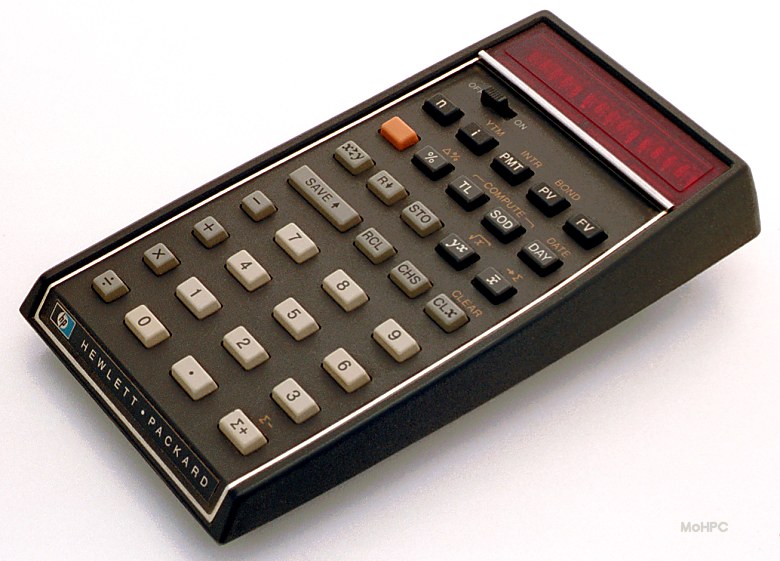
When digital books have really arrived they will be so much better than print books that nobody will feel nostalgic for print. The books and the libraries of 2020 will be vastly more useful and vastly more accessible than those that we have now. Darnton is right. Also, though he did not say this: not only will the digital libraries be so much better than the merely print-based libraries of the 1970s, they will also be so much unlike our early efforts to create digital books and digital libraries, that readers of 2020 will be looking back on the primitiveness of our current Kindles, EPUBs, GBS and other efforts with embarasment. Do any of us remember how clunky the first calculators were? About digital books and magazines I am an unmitigated optimist.

Even about newspapers. The few remaining digital newspapers will be great once the publishers have learnt how to make them work. There is still a huge amount of fear of digital in the publishing industry. There needs to be more excitement and enthusiasm.

Tuesday, March 31, 2009

Who Wants to Own Books?

Do we really want to own books? Do institutions really want to own books? I am a bit agnostic about the first question, but I suspect that on the second question the answer is more clear cut. For quite a lot of reasons (but not because they might want to sell them) institutional libraries really do want to own the books they have. They want to be able to keep them for as long as they might need them (and a bit longer) and they want to be able to do things with them that they and their users have not yet thought about. They want ownership in the round.

These thoughts are prompted by the comment of a friend who is rather taken with the Spotify music service, which streams you as much music as you can listen to, but does it all on the fly. My friend is rather relieved no longer to be carrying his gigabytes of digital music and thinks that something similar may be on the cards for books.

Suppose that you could have access to pretty well everything ever published, but you did not actually own any of it? This new service (call it Yangtse Book Search or Facebook Library) would allow you to sample everything in its purview (search and browse access) but the full reading rights would be gently rationed. Leave on one side, for a moment how that deal would be negotiated with the authors and publishers: but look at the matter as a consumer. Would you be willing to pay $9.99 a month which gets you reading access to five books a month, and $19.99 a month which get you reading access to thirty books a month (US or UK market only -- not world literature in original languages)? Once you have selected books for your choice in that month they remain open to you for an agreed period. A slew of specialist technical and professional books will be outside the catchment zone. They would cost extra. Household or family access via the cable channel? No problem $29.99 a month for the 30 book offering.

I don't know about you, but I would be mostly content with access to that digital library, and with enough subscribers it would pay the necessary royalties to authors, agents and publishers (no doubt mostly usage based). But libraries would not be very happy with such a scheme. Libraries want to own books, and they want to own books which readers may never consult. Or hardly ever.

If persistent search but intermittent reading, is the future of our individual enjoyment of books, widely shared but not owned, it would seem to me that the Google Books Settlement has got things upside down. In the Settlement Google envisages delivering annual licenses to libraries for large collections of books (collections with shifting contents) but individuals will be able to buy 'life time' access (quasi ownership) to individual titles. The assymmetry in the settlement between the market for individuals and for libraries is striking, and not really explained or justified, but it may be completely the wrong way round. Perhaps Google should go back to the negotiating table with the Books Rights Registry and strike a different deal? Or is that a complementary proposition that the BRR should offer to a Google competitor? The competing service would have the franchise to sell 'term of copyright' licenses to libraries for particular titles and short term access rights to individuals. That should introduce some competition which could help to mitigate the monopoly charge.

Sunday, March 29, 2009

A Democratic Quality to Digitization

Robert Darnton used this interesting phrase in his recent NPR comments on the Google Book Search project and the Settlement (a 7 minute interview here).

There is a democratic quality to digitization but if those supplying it are simply trying to maximise profits the whole thing could turn sour. (The Infinite Shelf .. On the Media, 27 March 2009)
Is it true that there is a democratic quality to digitization? I think there may be a profound truth there, and getting at it, may do something to reduce or quieten Darnton's worries. He is right to be worried. If Google were to become the predominant and monopolistic supplier of books (and other print, digital print, resources) through the web, that would be a disaster. But that is a big if because digitization of our print heritage is a broadly democractic shift. It is a democractic shift in much the same way as the invention and adoption of print led to, or was one of the necessary preconditions of the democratic thrust of the Enlightenment (see Darnton's original post on Google & the Future of Books). Darnton rightly points out that the democracy of the Enlightenment was partial and restricted in its reach by privilege
Far from functioning like an egalitarian agora, the Republic of Letters suffered from the same disease that ate through all societies in the eighteenth century: privilege. Privileges were not limited to aristocrats. In France, they applied to everything in the world of letters, including printing and the book trade, which were dominated by exclusive guilds, and the books themselves, which could not appear legally without a royal privilege and a censor's approbation, printed in full in their text. (NYRB 12 February 2009)
The web is putting the final nail in the coffin which restricted the privileges of print (bolstered by the legal privilege of copyright), initially to men (rather than women), the rich and then the wealthy, the formally educated and which even now in our own time excludes some. The democratization implicit in digitization works in two ways. It works for the universality and openness of distribution because it is now a fact that digital copies and digital access are available at marginal cost for everyone. A lot more stuff will be free, partly because advertising which accompanies or supports it can generate profits, but also because it really is dirt cheap to provide free web access. So cheap that to anyone who provides digital services, providing some services free, some access to content for free, is a no-brainer. Digital access is strikingly open and democractic in its thrust because it actually (and obviously) costs more to exclude someone or anyone from access to a web resource than to enable it for everyone. 'Open' is simply, for the supplier, the lowest cost access model on the web. Authenticating, selling, registering for or targetting access costs more. But the democractic bias of digitization works also at the point of creating digital resources. It is much easier to create and if necessary re-create digital resources than to look after them in any other way.

Moving from the democratic thrust of free access from digitization, a digital process is like a printer's press in that it enables us to originate digital masters. Digitization as a method of data capture, a means for transforming cultural objects to web presence, is also becoming more feasible and more necessary. Digitization as a process is democratic because it is repeatable and reliable and affordable. Digitization is also likely to be of higher quality if it is various and competitive (Google's problems with quality of capture are notorious). Digitization as a transformative process, relying on software, computers and scanning instruments, is becoming easier and cheaper at something close to Moore's law. Even Google's massive digitization project is now much easier and cheaper than it was when they started. Since digitizing books (films, works of art, music etc) is becoming more affordable and easier every year we should have more of it. We will probably soon have consumer-targetted, hand-held, intelligent scanners.

The real danger in the Google Book Search service and the Settlement is that libraries and publishers should start to think that digitization is best left to the uniquely specialised Google. To prevent a monopoly we need a choice of services which digitize books and print resources and serve them openly (or as commercial services) to audiences through the web.

I think Darnton is right, there is a democratic thrust to digitization and it is in all our interests that there should be lots of alternatives to the digitization engine that Google has created with the help of the New York Public library, the Oxford, Harvard, Michigan and Stanford University Libraries (of course many more univerisities are now in the Google ship). Surely, the Google Books Library, (for it is rapidly becoming that), needs to be watched so that it does not become an engine for monopoly pricing, but the best safeguard against this is to create and sustain alternatives. Having played a part in kicking off the Google initiative, Harvard can help the next and better proposition that comes along. Darnton as Harvard's librarian should be there to support it.

Friday, March 27, 2009

Networked Apps

There was a great deal of functionality promised in the Apple announcement of iPhone 3.0 O/S last week. Apple mentioned 100 end-user features and 1000 programmer API's. The SDK is now in the hands of developers and they are right now figuring out how it will all hang together.

One of the discussed technologies that intrigued me is Bonjour which is a type of easy, informal, local networking facility. A network for the nonce. With WiFi or Bluetooth and Bonjour a group of Macs, iPhones, or other devices will be able to share network functions or resources. So you will be able to say "Bonjour!" to your printer and print a page or more of copy.

Funnily enought there is at the moment no easy way of printing stuff off an iPhone. You can read pages of a book or magazine in an Exact Editions account on an iPhone, but there is no practical way of printing stuff off. It is possible to do a screen dump from an iPhone, but you then have to email the image to some account where you can use it, or edit it, or print it. In June with the release of the 3.0 operating system, and probably some new Apple kit, that will all change. There will also be some intriguing opportunities to share content between iPhones and other devices. This will encourage peer-to-peer promotion and viral marketing campaigns. How will authors and publishers react? Many publishers hate the idea of users copying content from one device to another, but it is something users will do and it can work in the authors favour if such viral copying encourages sales. It will be easier for publishers to get behind this concept when they are using a streaming service (such as Exact Editions) rather than a file-based download approach as with most eBook platforms. Using Bonjour to share a page or two of browser-dependent, evanescent and temporarily resident, content in a common reading experience will be one thing. Swapping whole content files between neighbouring iPhones and iTouches will be another nightmare scenario for music, film and book publishers. I guess that Apple will find some ways to limit that. But that could become a can of worms if it involves technical DRM.

By creating a rather supervised and enclosed media environment for publishers, Apple is attracting some scorn -- as a 'nanny' and a possible 'censor'. But Apple is also aligning itself with the owners of intellectual property and the providers of subscription services by claiming its 30% commission. Publishers may find this tariff a bit too rich and high, in the long run. But they will be reassured by the thought that Apple will be very motivated by its recurring media revenue streams.

Wednesday, March 25, 2009

Australia & New Zealand


Autralia and New Zealand joins the Exact Editions magazine store.

Tuesday, March 24, 2009

Apple as a Retailer

Mike Shatzkin over at the Idealog Blog has taken aim at our recent posting about Apple, Amazon and Google. We are in agreement with Mike that this ebooks, digital books, story is a good deal more complicated than it first seemed. We surely are in the very early stages of the game. Too early to call a winner, probably.

But Shatzkin has not understood what Apple are doing with the strategy announced for the iPhone 3.0 SDK. They are tackling the retail environment head on and building the retail functions. Shatzkin thinks that Apple will fail the retail test. Did Mike view the video presentation with which Apple gave a preview of 3.0 SDK? Consider that the very first item that Scott Forstall discusses (before even 'cut and paste'!) is the way that they have enhanced the App Store. Note that its a store. A place where consumers shop. It is a retail store which enables developer creativity and it will support discovery of books, magazines, games etc, browsing and sampling, search, metadata, price choice and traditional bookstore price anarchy, and after sales support (though some fulfillment and much support will fall to developers and publishers). Most striking is the near total freedom that publishers are given on pricing (99c -- $999). Especially in comparison to Amazon's half-hearted effort to get a $9.99 ebook price, and Apple's notorious inflexibility on music pricing in the iTunes store. It is surprising that anyone would think that Apple who have made such a considerable success of Apple stores and online retail selling will find themselves out of their depth with digital books. Nobody would say that building a retail system for digital books is going to be easy, but Apple clearly are a good candidate to do it. Especially now that they have announced this co-optive strategy.

Have book and magazine publishers learned much from the mistakes that music publishers made with digital music? They surely have learned something, but we can be sure that Apple have learned through bitter experience from the mistakes that music publishers have been making with music (often at Apple's expense). Steve Jobs has been having too much grief with the music supremos, eg over price and DRM. This time Apple are stepping back, facilitating a more open retail environment in which the publishers and software developers are invited to decide prices and to create concessions, services and brand-oriented offerings which Apple will transact for them. If a publisher is foolish enough to foist DRM on his customers that too can go through the Apple system. Above all the fashion, style, presentation, pricing and packaging elements can be left to the publishers and content experts. Apple will stick to its knitting.

Friday, March 20, 2009

The Race for Digital Books and Apple's Lack of Strategy

The three biggest players in the digital editions or eBooks space may have already announced their presence in the market: Amazon, Google and Apple. Apple did it this week and I am not sure that onlookers have yet understood the Apple position. There has been a persistent view that Apple may be planning to develop an eBook or a digital books strategy. I think it is now clear that their very clever strategy is based on the insight that they don't really need one.

Amazon and Google have been shaping up for a tussle for a while, and seem to be pulling the book market from opposite ends like a giant Christmas cracker waiting for it to come apart in their hands. With a bang. Apple, on the other hand, has been sitting coyly on the sidelines, with Steve Jobs publicly and sceptically wondering whether there is going to be a market for digital books.

The announcement earlier this week about Apple's iPhone OS 3.0 made it at last pretty clear how Apple is going to become a player and the strategy is so simple and solid that I am surprised that more of us did not see it coming. Apple has taken the very sensible position that it doesn't need to be a big player in the digital books or the ebooks market to win the game hands down. Apple is going to let authors, publishers and developers get on with their business and work out how the digital books market is going to work and Apple is just going to collect the market-maker's fee for letting it happen, on and in the iPhone arena. Apple is being quietly agnostic about the way that digital books should work, it is just inserting itself in the situation with the proposition, that if they are to be sold on the iPhone platform, Apple will take a 30% commission.

To get back to the Christmas cracker that Amazon and Google have been pulling at: Google thinks that the future of books is a future of digital editions in a global digital library (managed of course by Google). This is a world in which books are in a database in the cloud. Amazon thinks that the future of digital books is a future in which we all have, Kindle-shaped eBook readers in our pockets in which we store the books that we own. From the Google end of the cracker we are talking about massive databases where most usage is surely going to be free. From the Amazon end of the cracker we are looking at file formats where a lot of books, certainly new books, will be downloaded and probably sold, mostly by Amazon. Google has recently been showing some mild indecision about its own vision, first in producing a new type of re-flowable file format for its GBS Mobile offering, and then by offering half a million 19th century eBooks to the world via Sony. I dont think Google is really going down the eBooks road but it does look a bit like backtracking. Amazon has also shown some mild indecision by producing a virtual Kindle a Kindle 'environment' for the Apple iPhone which means that you do not need to have the actual bit of Amazon kit to read the proprietary file format. Amazon may have wobbled, but Amazon seems to be sticking to the view that it is in the bookselling business rather than the library business. Interestingly enough both these bouts of indecision took place on the iPhone platform. What is this telling us?

The position that Apple have announced for themselves is stylish, decisive and agnostic. Apple doesn't mind whether books are based in the cloud as web resources, or shipped around the internet as book-specific file formats. Web-based books, digital editions and ebook file formats can all run easily on the iPhone if that is what is needed: "Open house, come over here and play". That is the message from Cupertino. But Apple is also saying that if you want to trade these new booky gizmos on the Apple platform and sell them through the Apple e-commerce system, you will be expected to pay 30% of the gross to Apple. While you are at it you might as well call them Apps. In consideration for this courteous invitation, Apple will handle the transaction and any strictly necessary hosting fees.

Since Amazon have a track record of obtaining 55-65% discounts from book publishers, and since Google's terms have trade for the Settlement have been announced at 38% (plus a bit more), the Apple share does not look too greedy. But for the daily expense in running the Store it is a fat margin. Apple will thus appear to most publishers and authors as a reasonable partner, a less monopolistic partner, than either of the other West coast web giants, and since Steve Jobs is quite agnostic about the way in which the books will work Apple has a good chance of coming up with the prize hidden inside that cracker. If this is a race, I am tempted to call it for Apple. But there are quite a few laps to go yet.

Thursday, March 19, 2009

Google Books on Sony eBook Reader

Sony has done a deal with Google to make 500,000 public domain books available to users of the Reader device. This suddenly jumps Sony ahead of Amazon in terms of the race to get the bighest number of titles accessible from the Kindle or the Sony Reader. The Kindle owner has about 250,000 to choose from.The books on their way to Sony will be the 500,000 titles with cleaned up ASCII from the recently announced Google Books Search mobile operation. 500K titles are public domain worldwide, (about another million are available to US users of Google Book Search but they would not figure in the deal because the Sony reader has an international reach). The Google Books implementation will still be superior, because it will offer both the ASCII text and the backup page images, which are presumably not in the Sony versions.

Believe me, a lot of the books are very, very boring. Hardly of interest to anyone, in amongst the cobwebs there is a lot of wonderful 19th century literature, and we will see how Sony can tidy up a way of selecting relevant titles (Austen, Dickens, Twain) from this vast stockpile and then present them to readers who can only carry around 1.000 or so downloaded titles on the Reader device.

This is clearly an alliance between Google and Sony. That much is apparent. But who is competing with whom? Is it a matter of Google against Amazon (Google trying to slow up the advance of the Kindle, so that the concept of books as dataservices can get time to gell)? Or of Sony against Amazon (capture the mind-share for the worldwide eBook reader market, since Kindle seems to have won that match already in the USA). Or of Google against Apple (by showing that the iPhone is not the only mobile device which can carry a lot of good books)? Or is it really a matter of Google competing with Sony and the publishers (by showing that there are so many good books out there for free, that the market for paid for downloadable books is going to be a tough proposition to sell to consumers). On the face of it, giving away free access to half a million books when your device can only hold a very few of them is a trifle strange. Google ends up being the winner in that comparison.

Perhaps the way in which Sony delivers on this announcement will make it clearer who is competing with who. Come to think of it, since the Kindle can only be sold in the US and Google has another million books which can only be treated as public domain within the USA, should we be expecting the Kindle to emerge with access to these 1 million restricted titles? According to the NYT article Google is willing to make its catalog of digitised books available to "any other e-book distributor that shares its goals of making books more accessible." I will be surprised if that happens, but we live in strange times, and certainly Amazon shares with Google the goal of making books more accessible.

Tuesday, March 17, 2009

Google Library Expert on a Pod Cast

Fruitful discussion with Frances Haugen on the Library Gang Podcast (50 mins). She is an impressive spokes person for Google Book Search. She spoke well about Google Mobile and Catalogues and metadata (deep waters here). There were places where she had to be very careful about what she says (not allowed to talk about the Settlement before the judge's ruling this summer). She stressed that they really have a lot to do now to make the Settlement work. There is real pressure now to deliver: "Unfortunately, there is a lot of things that legally we have to do in the next two years we do not have as much design freedom as might be ideal."

In Frances's discussion of the way the mobile service was developed I was struck by the sense that the Google implementation is something of a compromise and also hard to achieve (the page image is available at one remove). The text files developed for the Mobile application is enhanced, "very nuanced": they needed to "understand what the text meant in the layout of the page" (eg to ignore headers and footers). We can be sure that there is a huge amount more that Google can and will do to find meaning and structure in texts and moving away from page layout may help this effort. It could also be that the decision to in large part omit illustrations and photographs from the Settlement-sanctioned commercial offerings has encouraged Google to move more towards a continuous text stream interpretation of the text. She was also quite cagey about whether they will do anything major in the near future about magazines and periodicals, but they clearly have long term ambitions in that space.

Joe Wikert's Magazine System

Joe Wikert works for O'Reilly Media Inc. and has an excellent pulpit at Publishing 2020 Blog. Yesterday he was blogging about his ideal magazine system.

Once upon a time I subscribed to more than a dozen different magazines. Keeping up was overwhelming at times, particularly since many of those magazines were a half-inch thick or more. (Anyone remember the good old days when Wired used to have some serious heft?!) Now I can count my magazine subscriptions on one hand. I still crave the content and the writers, but I prefer to read this information sooner than the print model allows. (A Model for the Magazine Industry)

The Exact Editions system gets close to being in his plan for the magazine industry, but we are missing the target on some of his goals:
  1. Joe wants to have access (so that he can choose) to every magazine on the planet. Steady on Joe, do you mean that the system should support every magazine in every language?Tthat is a pretty big number. We are talking maybe 20 or 30,000 consumer and special interest magazines world wide. Long way to go! This is what I would call a reasonable unreasonable goal. But, I agree with Joe that this has to be the distant target: consumers will want a magazine system to support them if they decide that they want to read Spanish-language, English-language and Japanese-language magazines on a mix and match basis.
  2. Joe wants to be able to read the whole magazine exactly as it is, the full contents, on his preferred device. We can comply with that and the Exact Editions system also provides access to the archived issues to all current subscribers. The archive will go back as far as the magazine publisher has provided us with PDF files. So the Exact Editions system is possibly giving Joe more than he asked for. Archives are easy for digital editions.
  3. But archives are available because the consumers subscribe to magazines as branded entities. Joe Wikert is looking for a system which would allow him to have roaming access to any magazine that he chooses month by month (admittedly for a pretty high 'eat all you can' price of $50 a month). Selling a revenue-sharing model to magazine publishers for this universal access scheme is going to be a tough proposition.
  4. Joe wants his system to deliver the content wirelessly to his various devices. Exact Editions can comply with that, provided that the device supports a standard web browser. PC, Mac, netbook, iPhone, Wii -- sure those devices are all fine (Joe may not yet be using the Wii for his magazine reading but he should try it out now). The problem for us is the Kindle. We dont yet support the Kindle, but I am confident that Exact Editions will support the Kindle just as soon as it supports standard web browsing and sells its platform in the European market from where most of our current magazines are sourced. It would be nice if the Kindle also had colour. Consumer magazines really need colour.
On one point, we completely agree with Joe Wikert. Magazine publishers absolutely need to get their digital offerings in place fast. At a price and in a format which all their consumers can enjoy.

Monday, March 16, 2009

Google Books Search: What is Good for Google is Good for the USA

There was an important Conference on the Legal and Publishing impact of the Google Books Settlement at Columbia Law School on Friday. Several attendees, led by Peter Brantley, were actively Twittering the event, see #gbslaw for the Twitter-stream. There are one, two very useful reflective summaries posted by Peter Hirtle (lawyer at Cornell Library).

Apparently one of the recurring themes in the conference was this mantra "What is good for Google is good for the USA." I am sure that it was said in jest/irony, but that must nevertheless have made the Google participants unhappy. Even if ironic, the comparison is wounding. Just now being compared to General Motors is nearly as bad as being compared to AIG, and is frankly worse than being compared to Microsoft (which would also be very unfair and unwelcome to Google, but the comparisons are coming...). The mantra is especially unfortunate, since it is far too close to the bone: the whole way the Google Book Search settlement is working out is far too US-centric, as though Detroit was the market, and the accessibility of digital books in the rest of the world was not a matter of importance to the US or to Google. General Motors has been building inefficient and slipshod cars which had limited appeal in the rest of the world and failed the ultimate tests of quality engineering and sustainability. Could Google fall into a similar trap of building too much, too wastefully, for local demand and national circumstance without full attention to all the factors which build quality, openness and sustainability? Apparently some anxieties on this score were raised at the meeting. Somewhere in the Twittering I saw someone questioning how the US would feel if another country adopted a similar approach a private enclosure and database representation of all the books in the English language held by French libraries (the French or even more probably the Chinese Union Database Library? It will probably happen). Can you imagine the uproar? Senator Conyers would have most unfavoured nation legislation in train within a twinkling...

A lot of the books from these dusty stacks in Michigan and California are foreign published. Through the group of libraries in the US with which it is collaborating Google will catch in its net of NotYet OutOfCopyright but OutOfPrint titles a vast swathe of books originally published by British, French and German publishers. Google has apparently spent $7 million in the last two month on press advertisements in over a hundred countries to advise authors and publishers of the rights that they may have in the Settlement to the use of their books in the US market ($7 million on print ads for the legal notice, few text database projects have had a total investment this large). But the authors of those books are also readers and if the eventual legal and technological effect of the Settlement is to make the access to those books much less viable in the countries in which they were written or published?

Spare a thought for Google: not only it is it being compared to General Motors, they now also have to deliver on the very substantial obligations which the Settlement imposes on them, in particular to roll out commercial services to libraries and to individuals (to reiterate: these obligations are only to deliver services to the US market). This is going to keep Google very busy. Many critics of the Settlement have pointed out that it creates an enormous (millions of books) private preserve for Google, from books which look more like they belong to the public domain, either because they are orphan, or because they close to orphan. This monopolistic position is seen as an obstacle to competition. Of course it is in one way a matter of enormous advantage for Google.

But there is another way of looking at the situation. Google is now under the obligation, the heavy public expectation of delivering services from this massive collection. I believe that it will be under a very heavy public expectation and moral obligation to deliver, or find some legal way to enable, similar services to overseas markets. Google has assumed an onerous obligation to curate and deliver services for a large class of legacy titles. Inevitably it has been taking short-cuts, there is a weird absence of metadata, it has missed some quality goals, the books are not always exciting, many of them are out of print for good reason, I suspect that the difficulty and the importance of this legacy task will in itself make it impractical for Google to be the innovator in the book space that it might like to become. It is much easier to deliver an innovative and truly revolutionary social service for book readers when you are not curating 10 million titles. Hirtle concludes his excellent notes with this:


Yet while there may be great disappointment with the process used to generate the settlement, I also detected no incipient revolution against the settlement itself. No one was calling for rights holders to register and submit comments to the court (as they can do until 5 May). No one was saying the court should reject it and tell the parties to start over. Yes, the class may be too large and the mechanism too crude, but we created this problem when we abandoned formalities, lengthened copyrights, and started treating every copyrighted item in the world like it was a Disney movie. Given this procrustean bed we have made for ourselves, the settlement may be our only way out. Yes, Congress should create a compulsory license authorizing the use of out-of-print books - but don't hold your breadth waiting for that. In the interim, the settlement may be the best we can hope for - even though it has the potential to radically alter all of our worlds. (Hirtle: Library Law Blog)

Google will proabably get its way, for the most part, with the Settlement, but it may also find the bed it has made for itself, with the aid of Publishers and the Author's Guild, somewhat procrustean. The tasks it faces are Herculean. It will surely get a lot of attention from lawyers (within and without the business). There will be worries about monoploy and anti-trust but there will be plenty of competition.

Wednesday, March 11, 2009

Ebooks, Online books, Digital Editions and Content

One of the problems which the eBook market faces is that we are not completely secure about what to call the thing that we are bringing into being. What are we talking about when we talk about eBooks? There is a fair old jumble of substantives clamouring to receive our attention: digital books, ebooks, electronic or computerised texts, textual databases, interactive texts, online books (or texts), plain old content, digital libraries, digital editions, web editions, etc. So here are some proposed definitions and qualifications:

An eBook is something which, in the general case, requires a dedicated eBook reader for it to be read. That is to say, an eBook is something that you will find in a Kindle, or a Sony eBook reader.

Distinct from the eBook is the file format in which the text is held. This might be something like the proprietary format of the Kindle (AZW) or it might be non-proprietary like the EPUB, formerly Open eBook format. An eBook will have a file format, and although it will generally be read through (on?) an eBook reader, this could be a virtual or layer of eBook reader not necessarily the physical hardware system for which the eBook was originally devised. So we have the Stanza reader on the iPhone or the PC which will read a lot of different books in the same software environment. Also we have the recently announced Kindle App which in a manner of speaking puts a virtual Kindle on the iPhone (and a similar trick could be performed for other hardware platforms). File formats, we have to point out, have different instances, and publishers and booksellers may sell individual copies of the eBook and track their destination through digital inventories. File formats can also be corrupted and encrypted, some publishers corrupt files by encrypting them in Digital Rights Management software. This practice (DRM) is a really terrible idea which insults and damages the market, but publishers are tempted to use it because digital files have marginal cost to copy and if books are encoded in file formats they look terribly vulnerable to illegal acts.

The file format for eBooks works to define and individuate particular books or titles, or works, or serials or issues (yes plenty of confusion there unless you keep all those matters straight). The Google Settlement has also introduced the fascinating new concept of an insert, and an insert generally does not contain its own illustrations but it, probably, will contain its own children's book illustrations, diagrams, charts and graphs (but not maps). I hope that is all perfectly clear, if it is not and further perusal of the Draft Settlement leaves you in any doubt I suggest that you engage the services of a copyright lawyer (preferably one with a background in the part-work printing industry).

Having introduced the topic of Google Books, we should explain that whilst it is generally sensible to ask about the file format for an eBook, it is generally not relevant to ask questions about the file format of digital editions. Here we may be engaging in some creative definition making, but we define and differentiate Google Book Search books and Exact Editions magazines and books as digital editions rather than eBooks. Digital editions are made from books as files, but it is not helpful to think of them as having a file format. The PDF which the publisher produced or the scanner generated is used to create a database, but the format of the book as input has little to do with the format of the book as it is used or browsed by the consumer. The Google and Exact Editions systems deliver them to users as a service, searchable, citeable and potentially shareable, but they are web services in which each printed page has a corresponding web page, a web page with a JPEG at the centre and chatter of more or less relevant HTML around it. One might think of the individual book as the total of its urls, and thus postulate the individual title as having a web file format defined by its web instances. But this is not too helpful because the books are held in a database and it is the functionality of this database and the API's to it, which effectively generate and limit its performance and usability. So unlike eBooks, digital editions, we say, do not have file formats and its not relevant to use the language of unit sales or DRM. Digital editions come from databases that host them, probably in the cloud, and this is a completely different ball of wax -- nor should you be deflected from this perception by the confusing fact that Google Book Search (and Exact Editions) offer you the opportunity to download a PDF, whether of individual pages or of the whole work.

That may be enough confusing terminology for one day, but we will doubtless return to the subject in future postings.

Friday, March 06, 2009

Kew


Kew, the quarterly magazine of the Royal Botanic Gardens is now in the Exact Editions store. I guess its our first gardening magazine, and it also sits well in the Ecology group.

Thursday, March 05, 2009

Improving Searchability and Findability

We have enhanced the searchability and findability of the Exact Editions service with a site release which is being rolled out today. The internal name for this enhancement is 'universal preview' and it brings magazines more into line with the way books are handled on the Exact Editions platform.

  1. Users can now search every issue of every title in the store. A search for Omdurman will bring up search results and fragments of pages. No full view pages. The first result of a search for Tony Blair is a page which is available in full view (its in a trial issue)
  2. Users can browse all the content, but only at thumbnail size. If any publisher chooses not to allow archival searching and thumbnail previews, this can be accommodated.
  3. Contents pages and front covers can be zoomed up to full size.
  4. The text of covers and contents pages will get pulled into search engines (Google and others).
  5. Existing "full" trial issues are undisturbed, and still feature on the magazine's marketing page.
  6. The grid of all issue covers on the marketing pages are now live click-throughs to the thumbnail previews.
We expect that this change will improve the traffic to sample issues, to searches and subscriptions to magazines in the service. There is a cost attached to offering free searching and search results from all the archives (an order of magnitude increase in the content searched from typical queries) but the efficiency gains we have realized since moving to Amazon S3 more than offset the cost of the additional database activity. So this improved accessibility is a direct benefit of cloud computing.

Amazon's Kindle on the iPhone

At the launch of the Kindle 2 a couple of weeks back, Jeff Bezos dropped some heavy hints that users would soon be able to synchronize their Amazon eBook content between the Kindle and other mobile devices. Yesterday they launched the Amazon App for the iPhone. This is a fascinating development, and I am sure that there will be plenty of ramifications. It has to be a good step for the overall development of the digital books market. Here is why:

  • It is a significant step away from the Amazon exclusivity that the Kindle appeared to embody. All the sales will still be going through the Amazon e-commerce system, but this move shows that Amazon reading experience will not be stuck within a totally proprietary environment.
  • As well as being a sign that Amazon is a bit more open than we thought, this move shows that Apple too is more open than some of us might have supposed (Apple's approval is needed for the App to get into the App Store) .
  • The Amazon books might look better on the iPhone than on the Kindle. Books no longer need to be stuck with its grey-scale only eInk environment. The iPhone, of course uses colour, so at least the covers of books and magazines in the Kindle format can now offer colour, at least on the iPhone. I wonder when Amazon will get this organized?
  • The Kindle still looks like an overly proprietary, insufficiently mobile, over optimised and limited, format, from which support might one day be withdrawn: but now at least there is a graceful way for Amazon to bow out if they decide to move on. They can allow the format and their licensed offerings to continue and survive on the Apple hardware (and other synchronised devices) when they finally decide to get out of the dedicated eBook hardware market. And my bet is they will.
  • We don't know how Amazon's license with the publishers works. Clearly Amazon reckons that it allows them to do synchronised distribution to the iPhone. This may be allowable under the terms of the license because Amazon can guarantee that the iPhone is tied to the Kindle owner's account. A more 'untethered' form of mobile phone could pose them with a licensing issue. They are probably stuck with the deal that they originally promoted and offered to publishers. I suspect that there may be some tight and tricky corners for them to negotiate.
  • Still no sign of the Kindle in international distribution. Perhaps Amazon's biggest problem here is figuring out a profitable and effective deal with carriers (they have a very unusual deal with Sprint in the US). Perhaps 'tethering' the Kindle to some other mobile platform will be a way to cross into Europe. Do I hear Kindle knocking on Nokia's door, or Vodafone sidling up to Amazon?
Perhaps there is a bit of cox and box going on between Amazon and Google. A few days before Amazon released Kindle 2, Google announced the availability of Google Book Search for mobile (at this point, this is most evident through the iPhone accessibility). Now Amazon have surged around the flanks of the massive archive of old-Google books, with their own outflanking movement. There must be a chance that Amazon will put their Kindle content onto the Android platform. We live in interesting times.

Wednesday, March 04, 2009

African Perspective

I have just had a short holiday in the Sudan. I was born there 60 years ago and have always wanted to go back, since I have plenty of childhood memories.

It was a great visit and good to see, when I got back, that one of the latest magazines to use the Exact Editions platform and to enter the store is the BBC World Service's magazine Focus on Africa. This is our second African current affairs title, and our first BBC title. It might even become a bit of a breakthrough with the BBC, who publish lots of magazines, which is a cool thought after hot and dusty Khartoum. You don't need to spend long in Africa to realise the enormous clout that the BBC has in that continent. My visit was a holiday, a trip back to my roots, but it left me reflecting on the narrowness of much new media innovation. Here are a few items for consideration:

  • The internet is every where in Africa even in remote towns. Wifi in our hotel worked just fine and was free to residents and their visitors, but my iPhone only worked as a phone. No data services seemed to be enabled. I guess that Apple and its partners will soon solve that.
  • Mobile phones are really important to much of the population. People were happy to lend us their phones, even strangers in a crowd would pass us a phone if we asked to make a call. Mobiles are the only easy way of getting round the massive Khartoum/Omdurman conurbation by taxi (maps and street locations are vague): all we needed to do was to ask our taxi driver to ring our host on his mobile phone and then get directions to our destination, directions which we obvioulsy could not understand since the conversation was entirely in Arabic (most taxi drivers had a smidgin of English).
  • Mobile phones are already very prevalent in the universities, but computers and netbooks are not common among the students at the universities we visited (Bakht er Ruda and Ahfad). The mobile phone is going to have huge educational impact in Africa.
  • There are a few English language universities (Ahfad is one) but much of the schooling and college education in the Northern 2/3 of Sudan is in Arabic. Bookshops mostly have Arabic language books.
  • eBooks and digital editions could have a huge educational impact. But not whilst they are all in English (wake up Amazon) and not while the territorial rights situation is so complicated and unworkable. It is really nuts that the Kindle is only for sale in the USA. Google will be hamstrung and pilloried if its Google Book Search remains only really useful in the USA. It is time that the English language publishing industry started thinking outside the London/New York/Hollywood axis.
  • We met many very friendly people and were given much generous Sudanese hospitality. But the regime is not very popular and is repressive. We met some activists and people were not afraid to speak out. But two of the interesting people we met were arrested shortly after we left the country. I guess some monitoring of mobile phones and internet use is going on. Privacy issues matter and should be hardwired into good web design. Not every country has an effective Supreme Court and a Bill of Rights.
I was hoping that this would be an Arabic Kindle:


It was shrinkwrapped but not, alas, the Arabic Kindle.

Tuesday, March 03, 2009

Mslexia


Mslexia, a magazine for writers and poets and creative readers, joins the Exact Editions store.

Focus on Africa


Focus on Africa published quarterly by the BBC World Service joins the Exact Editions store.